
A rotary table pad printing machine uses an indexing worktable to move workpieces through a series of stations. Depending on the machine layout, stations may be assigned to loading, printing, unloading or other operations. This arrangement can support an organized production flow, but the number of stations alone does not determine the actual number of finished products per hour. Output also depends on dwell time, the slowest operation and the method of handling parts.
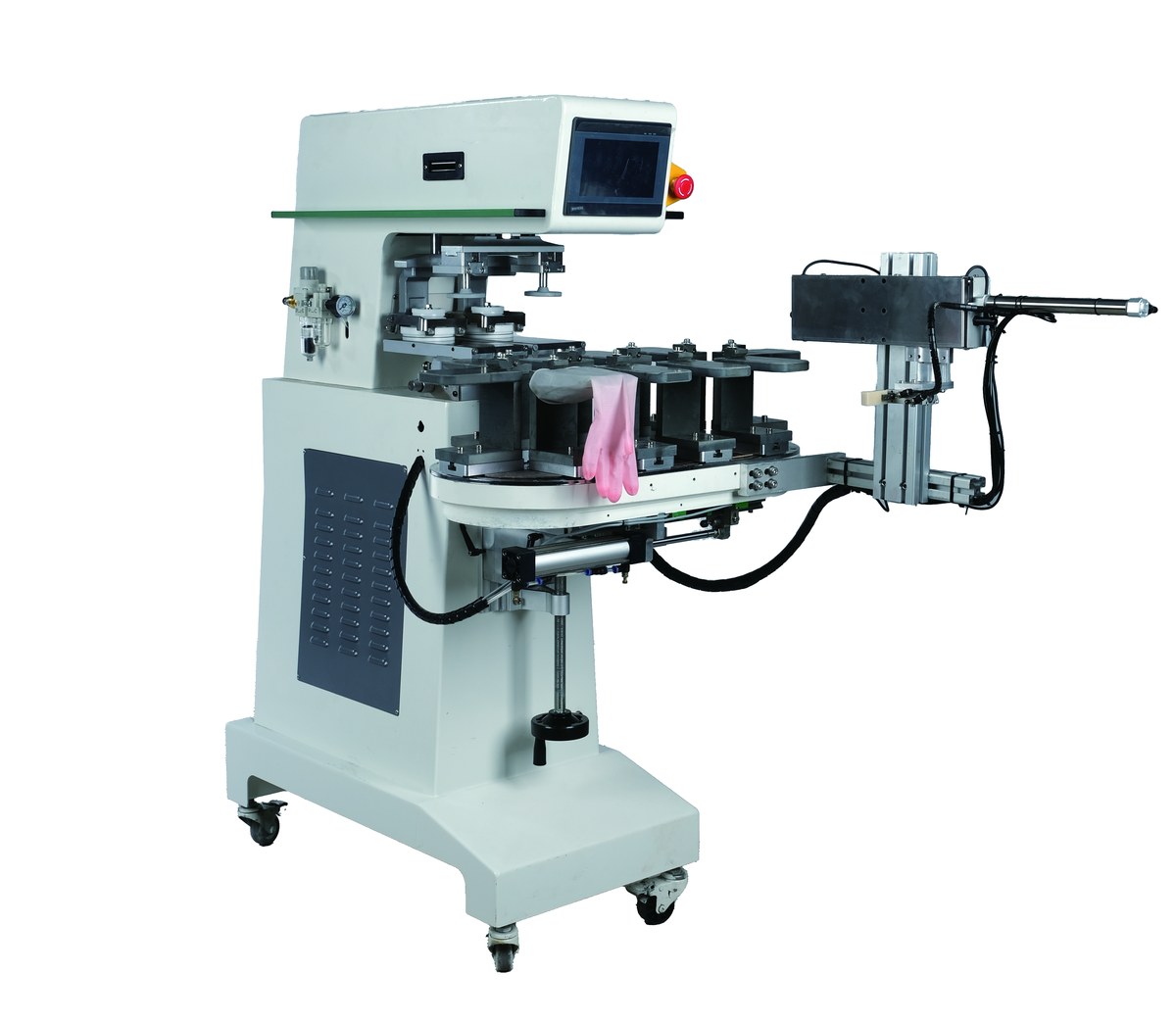
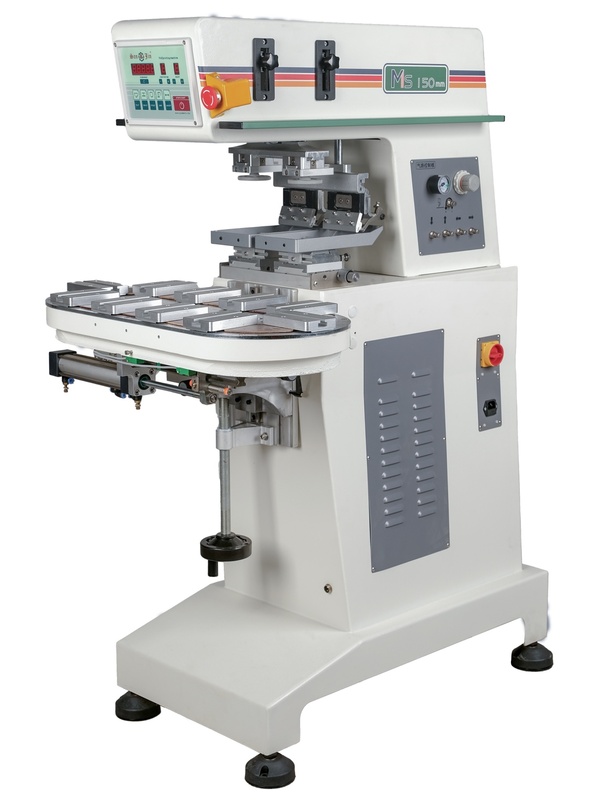
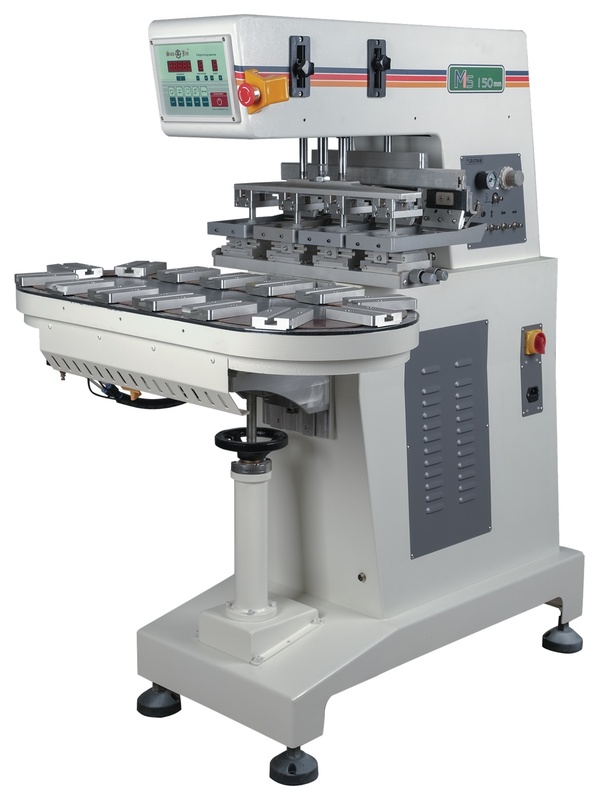
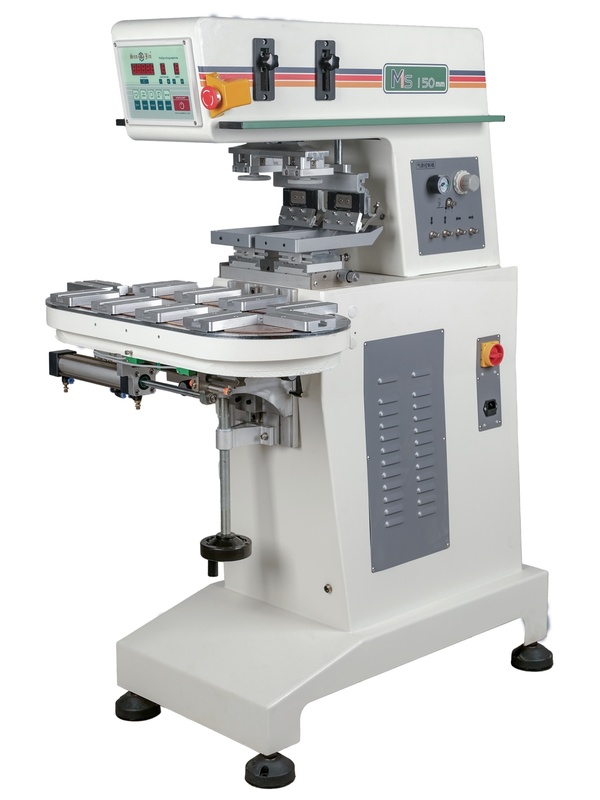
SANJIN manufactures MSZ-series rotary table pad printing machines in two-color and four-color configurations. The MSZ2-150-90-GA is a dedicated ten-station, two-color glove printing machine. Its practical value for suitable glove jobs lies in combining two-color printing with continuous product indexing, rather than necessarily exceeding the absolute piece count of a single-color machine.
A rotary indexing table should not be confused with a rotary fixture that turns an individual workpiece about its own axis. For example, printing on opposite sides of a mug may require a separate product rotation mechanism and compatible fixture, even if a machine has a rotary worktable.
Before selecting equipment, confirm the workpiece size, fixture footprint, required number of colors and loading method. For special parts or automated handling, additional clearances and station requirements should be evaluated. SANJIN can review samples and artwork to determine an appropriate station arrangement and printing solution.
No. Station count and printing color count must be considered separately.
Not necessarily. That operation generally requires a suitable product rotary fixture or mechanism.
Related Categories:Multi-Color Pad Printing Machines · Glove Printing Case (Video)